
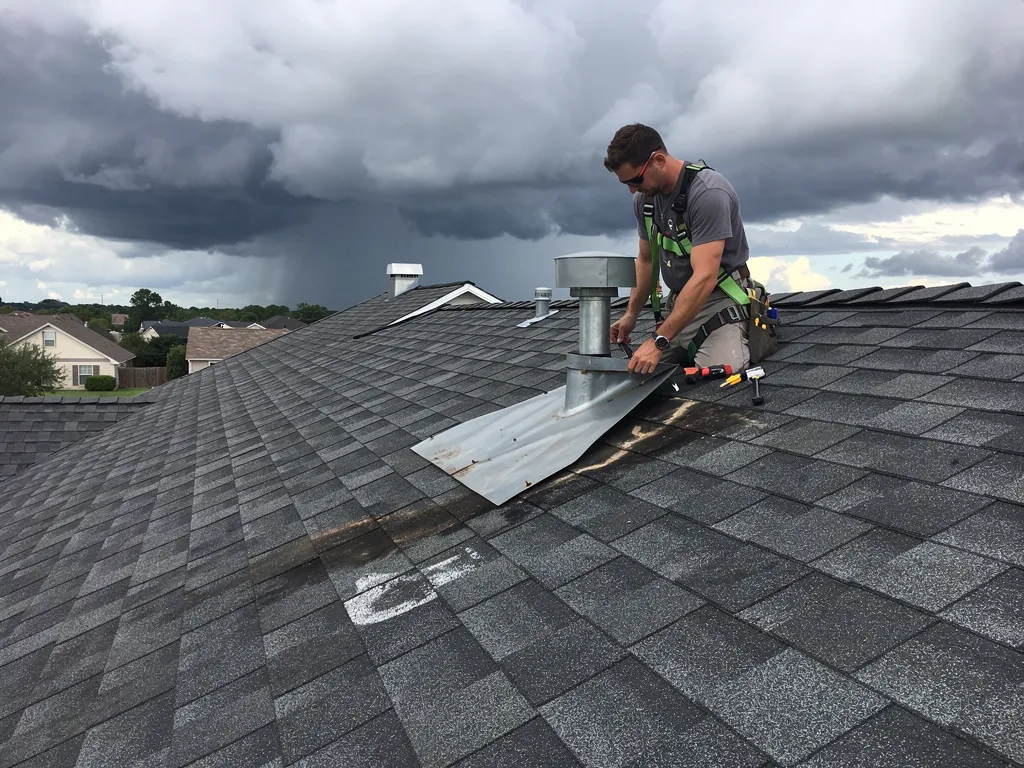
A roof leak in Beaumont rarely starts as a dramatic event. It usually begins as a faint ceiling stain, a damp attic smell, or a drip that only shows up during a heavy Gulf Coast downpour. By the time water is visibly coming through the ceiling, it has often been soaking into insulation, decking, and framing for weeks.
Southeast Texas is hard on roofs. Humid subtropical weather, heavy seasonal rain, intense summer sun, and hurricane season all put steady stress on every shingle, seam, and flashing detail. This guide covers the most common causes of roof leaks in Beaumont, how each one is fixed, what you can safely do while you wait for a repair, and how to tell when a repair is enough and when it is time to replace.
If you already have an active leak, you can skip ahead or request a free roof inspection from the local team at Cool Roofs Beaumont.
Why Beaumont Roofs Leak More Than You Might Expect
Beaumont sits in the Golden Triangle of Southeast Texas, close to the Gulf of Mexico and the Neches River. That location shapes how roofs age and fail:
Heavy rainfall. Annual rainfall in the area is commonly cited in the mid-50s to around 60 inches, and individual storms can deliver far more. During Hurricane Harvey in 2017, a gauge near Nederland recorded 60.58 inches from a single storm, a U.S. record for a tropical system.
Year-round humidity. Moist air promotes algae growth, trapped attic moisture, and faster deterioration of roofing materials and wood decking.
Hurricane and tropical storm season. The Atlantic season runs June 1 through November 30. Wind-driven rain pushes water sideways and upward under shingles in ways ordinary rain does not.
Intense heat and UV exposure. Long, hot summers dry out asphalt shingles, harden sealants, and cause materials to expand and contract daily, which gradually opens small gaps.
Frequent thunderstorms. Straight-line winds and hail can loosen or bruise roofing materials without leaving damage that is obvious from the ground.
A roof that would last a long time in a drier, milder climate can wear out noticeably faster here, and small defects turn into leaks sooner.
Signs You Have a Roof Leak
Not every leak shows up as a drip. Watch for these early warning signs:
Brown, yellow, or tan stains on ceilings or upper walls
Bubbling, peeling, or sagging paint or drywall
A musty or damp smell in the attic or upper rooms
Dark streaks, mold, or damp spots on attic rafters and decking
Wet or compressed insulation
Missing, cracked, curled, or lifted shingles
Granules collecting in gutters or at downspout exits
Daylight visible through the attic ceiling
Higher cooling bills (wet insulation loses much of its insulating value)
Water often travels along rafters and decking before it drops through the ceiling, so the stain inside your home may be several feet away from the actual entry point on the roof. That is one reason professional leak detection matters.
10 Common Causes of Roof Leaks in Beaumont (and How They’re Fixed)
1. Damaged or Missing Shingles
Cause: Wind from thunderstorms and tropical systems can lift, crack, or tear shingles away completely. Age, heat, and UV exposure also make shingles brittle, so they curl, crack, or lose their granule protection.
Fix: A roofer replaces the damaged shingles, checks the underlayment beneath them, and re-seals surrounding shingles so they lie flat and bond properly. If many shingles are affected, repair may not hold up for long. See our roof shingle repair services for what a proper repair includes.
2. Failed or Damaged Flashing
Cause: Flashing is the metal that seals the joints around chimneys, skylights, walls, valleys, and roof edges. Over time it can rust, separate, or crack, and the sealant around it can fail. Flashing failure is one of the most frequent causes of leaks, especially at roof transitions.
Fix: Damaged flashing is removed and replaced, not simply caulked over. Quality repair involves re-integrating the new flashing with the shingles and underlayment so water runs over it instead of behind it.
3. Storm and Hurricane Damage
Cause: High winds, flying debris, fallen limbs, and hail can break shingles, dent metal, tear underlayment, and damage vents. Some damage is obvious, but a lot of it is subtle and only becomes a leak after the next heavy rain.
Fix: Start with a thorough inspection for both visible and hidden damage, followed by temporary protection (such as tarping) if needed and permanent repairs. If you suspect storm damage, learn more about our storm damage repair process and how to document damage for your insurance claim.
4. Clogged or Damaged Gutters
Cause: Leaves, pine needles, and debris back water up at the roof edge, where it can seep under shingles and into the fascia and decking. Sagging or detached gutters make the problem worse.
Fix: Clean the gutters, repair or re-hang damaged sections, and make sure downspouts carry water well away from the foundation. Regular gutter cleaning is a low-cost way to prevent costly edge and fascia damage, especially after fall leaf drop and storm season.
5. Worn or Cracked Roof Penetrations (Vents, Pipes, Chimneys)
Cause: Plumbing vent boots, exhaust vents, and chimneys all pierce the roof. The rubber collars around vent pipes commonly crack from sun exposure well before the rest of the roof wears out.
Fix: Replace the cracked boot or vent assembly, reseal, and verify the surrounding shingles and flashing. This is often a quick, inexpensive repair that prevents a major leak.
6. Exposed or Backed-Out Nails
Cause: Nails can work loose as materials expand and contract in the heat. A raised nail head pushes up the shingle above it, creating a pinhole path for water. Nails that were driven in at the wrong angle or depth at installation cause similar problems.
Fix: Properly re-fasten or replace the nail, seal the area, and check nearby fasteners. If many nails are loose, it can indicate a bigger installation or aging issue.
7. Poor Attic Ventilation and Condensation
Cause: Not every wet attic is a roof leak. In Beaumont’s humid climate, poorly ventilated attics trap warm, moist air that condenses on the underside of the roof deck, leading to dripping, mold, and rotting wood that mimics a leak.
Fix: A roofer or inspector identifies whether the moisture is from outside water or interior condensation, then improves airflow with ridge vents, soffit vents, or additional intake and exhaust. Fixing ventilation also helps shingles last longer and can lower cooling costs.
8. Ponding Water on Flat or Low-Slope Roofs
Cause: Flat and low-slope roofs on commercial buildings, additions, and porches can hold standing water if drainage is inadequate or the membrane has settled. Standing water accelerates membrane aging and finds every seam and puncture.
Fix: Repair or patch the membrane, restore drainage, and in some cases apply a restoration coating or replace the system. Beaumont business owners can learn about commercial roofing options including TPO, PVC, EPDM, modified bitumen, and coatings.
9. Rusted, Loose, or Damaged Metal Roofing
Cause: Metal roofs handle Gulf Coast storms well, but they are not maintenance-free. Exposed fasteners can back out, rubber washers dry out, panel seams can open, and scratches or impact damage can expose bare metal to moisture and rust.
Fix: Replace worn fasteners and washers, reseal seams, repair or replace damaged panels, and treat or cover rust. Our metal roof repair service covers these common problem points.
10. An Aging Roof That’s Reached the End of Its Service Life
Cause: Even a well-built roof wears out. Brittle shingles, widespread granule loss, repeated patch repairs, and leaks in several areas at once all point to a roof that is failing as a whole rather than at one spot.
Fix: At this stage, patching tends to be a short-term fix. A roof replacement is usually the more cost-effective and reliable answer. Your roofer should be honest about which situation you are in. We cover this decision in the next section.
Repair or Replace? How to Decide
Many leaks can be fixed with a targeted repair. Replacement becomes the smarter choice when the problem is bigger than one spot.
A reputable contractor will show you photos of what they find, explain why they recommend repair or replacement, and give you a written estimate. If you want a second opinion, a professional roof inspection gives you an objective look at the roof’s real condition before you decide.
What to Do When You Discover a Leak (Safe Temporary Steps)
While you wait for a professional repair, a few safe steps can limit damage:
Protect your belongings. Move furniture and valuables away from the leak and cover them.
Contain the water. Place a bucket under the drip. If a ceiling is bulging with water, carefully puncture the lowest point with a small tool to let it drain into a bucket. This can prevent a larger ceiling collapse.
Document everything. Take clear photos and videos of the damage, the date, and the weather conditions. You will want this for an insurance claim.
Turn off power if water is near electrical fixtures. If water is dripping near light fixtures, outlets, or ceiling fans, shut off power to that area at the breaker.
Call a roofer promptly. Temporary measures only buy time.
Safety note: Do not climb onto a wet or storm-damaged roof. Slippery surfaces, weak decking, and hidden hazards make DIY roof work dangerous. If an emergency tarp is needed, leave it to a professional.
For additional damage-control ideas, see our guide on quick fixes for roof damage.
What Does a Professional Roof Leak Repair Involve?
A proper leak repair is more than dabbing sealant on a stain. Here is what a thorough process looks like:
Interior and attic inspection. The roofer looks for stains, wet insulation, and water trails to trace the leak back toward its source.
Exterior roof inspection. The roof surface, flashing, penetrations, valleys, and edges are checked for damage and wear.
Leak source identification. Because water travels, the true entry point may be some distance from the visible stain.
Written diagnosis and estimate. You should understand what failed, what is recommended, and what it costs, before work begins.
Repair. Damaged materials are removed and replaced, flashing is corrected, and seals are restored properly.
Moisture and decking check. Wet or rotted decking is replaced so the new repair has something solid to attach to.
Cleanup and final check. The work area is cleaned and the repair is verified.
If water has already entered your home, addressing wet insulation, drywall, and mold early is just as important as repairing the roof itself.
What Affects the Cost of Roof Leak Repair in Beaumont?
Repair costs vary widely, so be cautious of anyone who quotes a firm price without seeing the roof. The main factors are:
Cause and scope of the leak. A cracked vent boot is a very different job from storm-damaged decking and flashing.
Roof material. Asphalt shingle, metal, flat roofing, and specialty materials each have different repair requirements and costs.
Roof pitch and accessibility. Steep or hard-to-reach roofs take more time and safety equipment.
Extent of hidden damage. Wet insulation, rotted decking, or framing damage adds to the scope.
Emergency or after-storm timing. After major storms, demand rises and temporary protection may be needed.
Permits and code requirements where applicable.
If cost is a concern, ask about financing. Cool Roofs offers financing options so a necessary repair does not have to wait.
Roof Leaks and Insurance in Southeast Texas
Many Beaumont homeowners have coverage that applies to sudden storm damage such as wind or hail, but insurance generally does not cover leaks caused by long-term wear, neglect, or lack of maintenance. Keep these points in mind:
Review your policy. Check your deductible, especially any separate wind and hail deductible, which is often a percentage of your home’s insured value on the Gulf Coast.
Document quickly. Photograph damage and keep records of repairs and receipts.
Report promptly. Policies typically require timely notice of a claim.
Get a professional inspection. A written report from a licensed roofer can support your claim.
Make reasonable temporary repairs to prevent further damage, and keep the receipts.
Coverage varies by policy, so confirm details with your insurance provider or agent. Cool Roofs is not an insurance adjuster, but our team can inspect the roof and provide documentation of what we find.
How to Prevent Roof Leaks in Beaumont
Prevention costs far less than repair. A simple maintenance routine goes a long way on the Gulf Coast:
Schedule an annual roof inspection, plus an extra check after any major storm or hurricane.
Keep gutters and downspouts clean, especially after fall and after storms.
Trim overhanging branches that scrape shingles or drop debris and limbs onto the roof.
Remove debris from valleys and flat areas.
Address algae and moss early, since they hold moisture against roofing materials.
Check attic ventilation and insulation to control heat and humidity.
Replace worn flashing and vent boots before they fail.
Fix small problems fast. A loose shingle repaired today prevents a ceiling replaced next season.
Our Homeowner’s Protection Program is designed to help homeowners stay ahead of roof problems with ongoing care rather than waiting for a leak.
Choosing a Roof Repair Contractor in Beaumont
Leaks bring out plenty of contractors after storms, including some that are out-of-town and out of business within a year. Before you sign anything:
Verify the company’s licensing, insurance, and local presence.
Read recent reviews and check for Better Business Bureau accreditation.
Get a written estimate that spells out scope, materials, and warranty.
Be cautious of high-pressure tactics, large upfront payments, or vague quotes.
Ask for manufacturer credentials and workmanship warranty details.
Choose a contractor who can explain the problem clearly and show you the evidence.
For more on what to look for, read our guide for Memphis residents on ensuring quality roof repairs. The same principles apply anywhere. To learn why acting quickly on moisture problems matters, see how roofing experts address water damage in Austin, and for a broader look at residential services, read our overview of residential roofing services in New Braunfels, TX.
Frequently Asked Questions
How do I know if my roof is leaking?
Look for ceiling or wall stains, peeling paint, musty odors, damp insulation, and missing or damaged shingles. Checking your attic during or right after rain can help you spot active moisture.
Can a small roof leak wait?
It is risky to wait. Even a small leak can saturate insulation, rot decking, and grow mold. Repair costs generally climb the longer water gets in.
How long does a roof leak repair take?
Many minor repairs, such as replacing shingles or a vent boot, can be completed in a few hours to a day, depending on weather and access. Larger repairs take longer.
Can you repair a roof leak in the rain?
Permanent repairs generally need dry conditions for proper adhesion and safety. A professional can install a temporary tarp or sealant to stop water until the weather clears.
Is a roof leak covered by homeowners insurance?
Sudden damage from covered events like wind or hail is often covered, while leaks from wear, age, or poor maintenance usually are not. Check your policy and speak to your insurer.
Why does my roof leak only when it rains hard?
Wind-driven rain and heavy downpours can push water through small gaps, such as lifted shingles, failing sealant, or tiny flashing cracks, that stay dry in light rain.
How often should I have my roof inspected in Beaumont?
At least once a year, and again after any major storm, hurricane, or hail event.
Should I repair or replace my roof?
Isolated damage on an otherwise healthy roof is usually repairable. Widespread wear, multiple leaks, or an aging roof often make replacement the better long-term value. An inspection will tell you which applies.
Get Your Beaumont Roof Leak Fixed Right
A small leak today can become a major repair tomorrow. If you see stains, smell dampness, or suspect storm damage, don’t wait for the next downpour to find out how serious it is.
Cool Roofs serves homes and businesses across Beaumont with leak detection, repairs, storm damage restoration, and full roof replacement, plus a free roof inspection to help you understand exactly what your roof needs.