
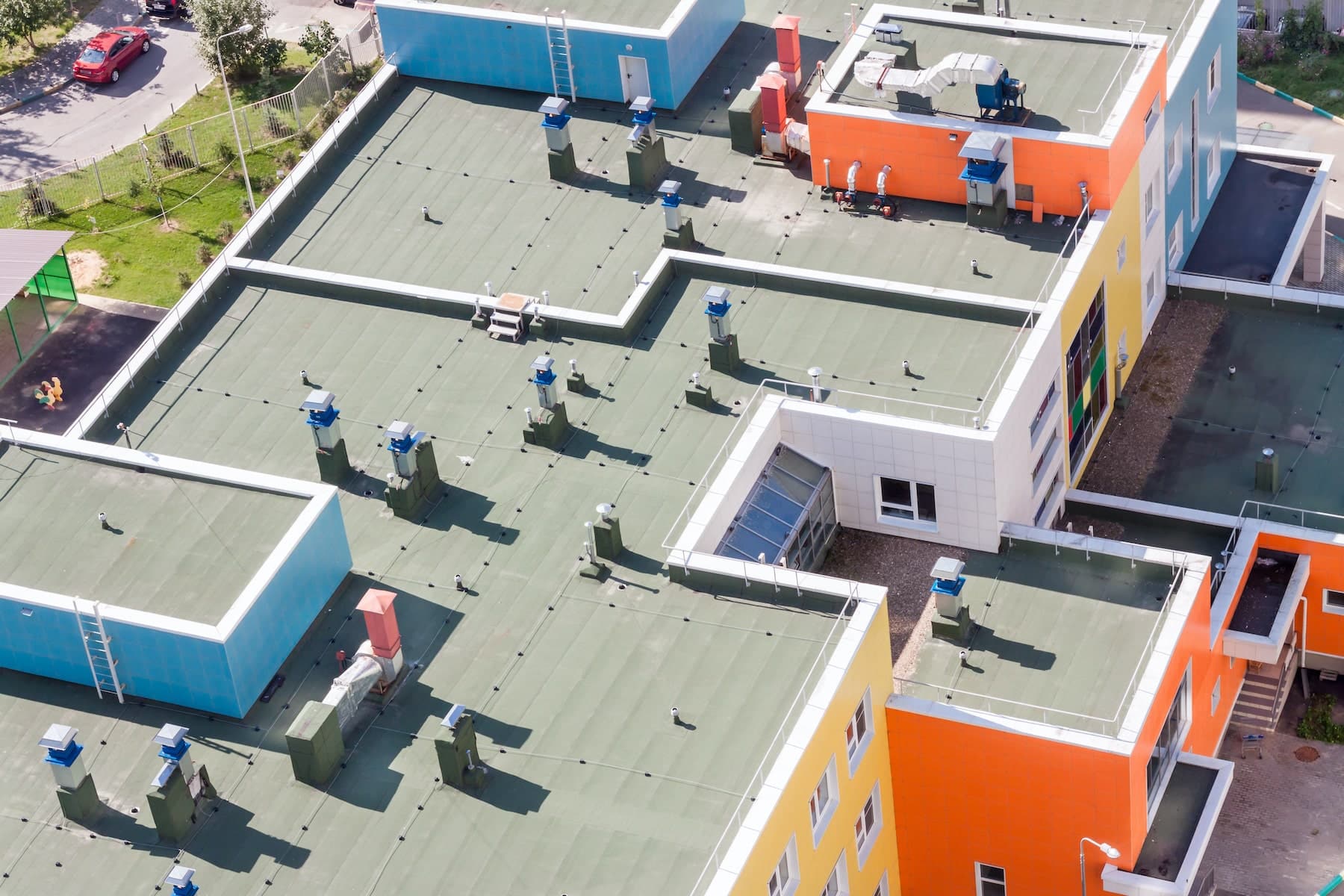
Hey, my name is Hudson of Cool Roofs Austin– owner, and managing partner. Today, we’re doing a commercial building inspection. Few things to consider whenever you are doing a commercial building inspection. Number one is what your customer requires. Number two what is the building consists of, the constructional integrity of decking, and then what is the roof system on top of that? How we do that is through field inspection.
From here we’re going to take a look at the drip edge, and how many roof systems we have on top of the building. Is there one roof, or are there two roofs? If we have two roofs, we can’t go back with the manufacturer’s warranty. So, there are a lot of facts that we have to figure out right now in order to provide customer value.
Why Commercial Roof Inspections Matter
Commercial roofing systems are exposed to intense Texas heat, heavy rain, hail, high winds, and severe weather throughout the year. Over time, these conditions can cause damage that may not be obvious from the ground.
A professional inspection can identify potential issues before they lead to leaks, interior damage, business interruptions, or premature roof replacement.
Regular inspections also give property owners a better understanding of the remaining life and overall condition of their commercial roof.
What We Look for During a Commercial Roof Inspection
Our inspection process focuses on the overall condition and performance of your roofing system.
Roof Surface & Membrane
We look for visible damage, deterioration, punctures, cracks, blisters, loose materials, and other signs that the roof may require attention.
Flashing & Seams
Flashing, seams, penetrations, and transitions are common areas where water can enter a commercial building. These areas are carefully evaluated for damage or deterioration.
Drainage Systems
Proper drainage is essential for protecting a commercial roof. We inspect drains, scuppers, gutters, and other drainage components for potential issues that could result in standing water.
Signs of Water Damage
Leaks aren’t always immediately visible from inside the building. We look for signs of moisture intrusion and other indicators that water may be getting through the roofing system.
