
How Long Does a PVC Roof Last? (And How to Maintain It)
When a building owner or property manager is weighing flat roofing options, one question comes up every time: how long will it actually last?
PVC roofing has earned a strong reputation in the commercial and industrial roofing world – and for good reason. But lifespan is not just a number printed on a spec sheet. It depends on the quality of installation, the climate your building sits in, and how well the roof is maintained over time.
This guide breaks down everything you need to know: the realistic lifespan of a PVC roof, the factors that shorten or extend it, and a practical maintenance plan to protect your investment for decades. If you are already exploring options, you can learn more about Cool Roofs’ PVC Roofing services and what sets a properly installed system apart.
What Is PVC Roofing and Why Is It Used on Flat Roofs?
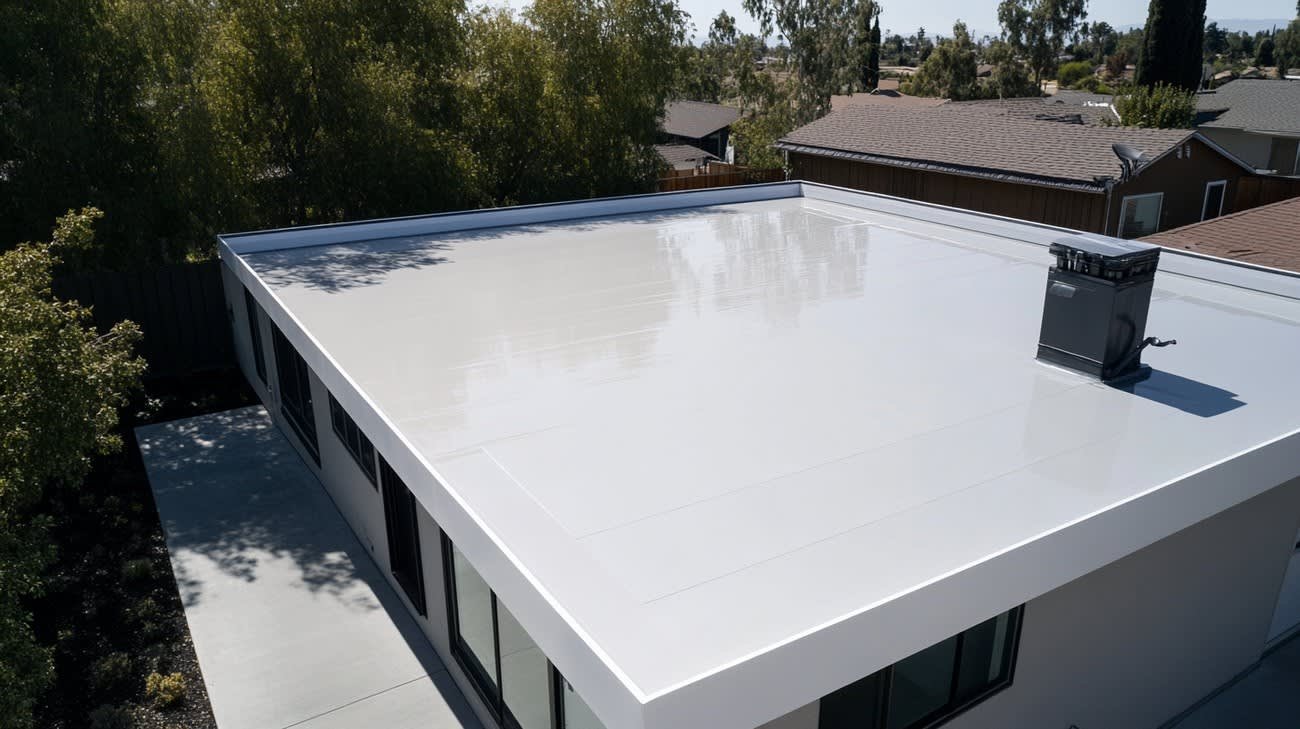
PVC stands for polyvinyl chloride – a thermoplastic membrane that has been used in commercial roofing since the 1960s. It is most commonly applied to flat or low-slope roofs, where traditional shingles and tiles are not suitable.
PVC roofing membranes are manufactured in large sheets, typically 40 to 80 mils thick, and are heat-welded at the seams to create a fully continuous, waterproof surface. That welded seam is one of PVC’s biggest advantages – it produces a bond that is actually stronger than the membrane itself, meaning the seams are not the weak point they often are with other flat roofing systems.
The material is also inherently resistant to chemicals, grease, and oils – which is why it is a go-to choice for restaurants, food processing plants, and industrial facilities. In Texas, where roofs contend with intense UV radiation, heat, and sudden severe weather, PVC’s reflective white surface and flexible composition make it particularly well-suited for the climate.
PVC is part of the single-ply roofing category alongside TPO and EPDM. If you want to compare how it stacks up, our TPO Roofing page and EPDM Roofing page cover the key differences.
How Long Does a PVC Roof Last?
The honest answer: a well-installed PVC roof on a commercial building typically lasts between 20 and 30 years. High-quality membranes from premium manufacturers, installed by certified contractors and properly maintained, can push that to 30 years or beyond.
Here is a realistic breakdown by scenario:
Minimum lifespan (poor installation or no maintenance): 10-15 years. Improperly welded seams, inadequate drainage design, or complete lack of inspections will significantly reduce how long the system performs.
Average lifespan (standard installation, basic maintenance): 20-25 years. This is what most commercial building owners experience with a reputable contractor and routine inspections.
Maximum lifespan (premium membrane, expert installation, regular maintenance): 30+ years. With the right system, proper drainage, and annual professional care, PVC roofs regularly exceed their warranty periods.
For context, here is how PVC compares to other common flat roofing materials:
TPO: 15-25 years average lifespan. Excellent energy efficiency but slightly less chemical resistance than PVC.
EPDM (rubber): 20-25 years. Durable but absorbs heat rather than reflecting it – a meaningful drawback in Texas summers.
Modified Bitumen: 15-20 years. A layered system with good waterproofing but more maintenance requirements over time.
Built-Up Roofing (BUR): 15-30 years. Depends heavily on number of plies and installation quality.
PVC sits at or near the top of the single-ply category for longevity, particularly in climates with significant UV exposure and temperature fluctuation – both defining characteristics of Texas weather.
What Factors Affect How Long a PVC Roof Lasts?
Knowing the average lifespan is useful, but what actually determines where your roof falls on that range? These are the six most important variables.
1. Installation Quality
This is the single most important factor. PVC roofing performance is almost entirely dependent on how well the seams are heat-welded. A contractor without the proper training or equipment can produce seams that look fine on the surface but fail within a few years. The membrane can also be installed with insufficient fastening or improper termination at edges and penetrations.
Always hire a licensed, certified contractor with demonstrated PVC installation experience. Cool Roofs is a licensed roofing contractor serving Texas with RCAT certification and a track record of 2,000+ completed projects.
2. Membrane Thickness
PVC membranes come in different thicknesses, typically measured in mils (thousandths of an inch). The most common commercial options are 40, 50, 60, and 80 mil. Thicker membranes resist punctures, weathering, and foot traffic better than thinner ones.
For high-traffic rooftops – those with HVAC equipment, rooftop access points, or solar panel installations – a 60 or 80 mil membrane is worth the additional investment. Thinner membranes are appropriate for simple low-traffic applications.
3. Climate and UV Exposure
Texas is one of the most demanding roofing environments in North America. The combination of extreme summer heat (regularly above 100 degrees F), intense UV radiation, and sudden severe weather events – including hail – means roofing materials here are under more stress than in more temperate climates.
PVC’s reflective white surface is a significant advantage in this environment. It reflects 70-80% of solar radiation rather than absorbing it, which reduces thermal cycling (the constant expansion and contraction that degrades roofing materials over time). This is why PVC tends to perform particularly well in Texas compared to dark-membrane alternatives like EPDM.
4. Drainage Design
Standing water is a flat roof’s worst enemy. Even PVC, which is highly waterproof, will degrade faster when water is allowed to pond on the surface for extended periods. Good drainage design – proper slope, functional drains, and clear gutters – is essential to long-term PVC performance.
Blocked drains and clogged gutters are a leading cause of premature roof failure. Regular gutter cleaning and drain maintenance should be part of every building’s maintenance schedule.
5. Foot Traffic and Rooftop Equipment
Every HVAC technician, maintenance worker, or contractor who accesses your roof is a potential source of membrane damage – particularly if they drag equipment across the surface or use tools that can puncture the membrane.
Walk pads should be installed in high-traffic pathways, and all rooftop work should be coordinated with your roofing contractor to ensure the membrane is protected. Pipe supports and equipment pads should be properly designed to distribute weight rather than concentrate it on small membrane areas.
6. Quality of the Membrane Itself
Not all PVC membranes are the same. Premium products from established manufacturers like Sika Sarnafil, Versico, and Carlisle use high-quality plasticizers and UV stabilizers that maintain membrane flexibility and resistance over decades. Lower-grade membranes can become brittle, shrink, or delaminate prematurely.
When evaluating a PVC roofing proposal, ask specifically about the manufacturer, the membrane thickness, and the warranty terms. A 20-year material warranty from a reputable manufacturer is a strong signal of product quality.
Warning Signs Your PVC Roof Needs Attention
Even a well-maintained PVC roof will show signs of wear over time. Catching these early – before they become structural problems – is where regular inspection pays off. Here is what to look for:
Seam separation or lifting: Heat-welded seams that begin to peel apart are a serious warning sign. Water will infiltrate quickly once a seam opens. This needs professional repair immediately.
Surface cracking or brittleness: PVC membranes can become brittle as plasticizers migrate out of the material over time, especially in roofs nearing end-of-life. Cracking along the surface or at flashings is a sign the membrane is aging.
Ponding water: Water that remains on the roof surface 48 hours after rain indicates a drainage problem. Even a waterproof membrane will degrade faster when constantly submerged.
Blistering or bubbling: Air or moisture trapped beneath the membrane creates bubbles or blisters. These indicate either an installation issue or moisture infiltration that has occurred over time.
Damaged or deteriorating flashings: Flashings around penetrations, drains, HVAC units, and roof edges are common failure points. Cracked, lifted, or improperly sealed flashings allow water entry even when the main membrane is intact.
Interior water stains or leaks: If water stains appear on interior ceilings or walls, the roof membrane has been compromised somewhere. The source is not always directly above the stain – water travels before it finds an entry point.
If you notice any of these issues, schedule a professional inspection as soon as possible. Cool Roofs offers commercial roof inspection services that include a full photo report and transparent repair recommendations. You can also read more in our blog post: How to Tell If Your Commercial Roof Needs Repair or Full Replacement.
PVC Roof Maintenance: A Complete Guide
The difference between a PVC roof that lasts 20 years and one that lasts 30 years often comes down to maintenance. The good news is that PVC is one of the lower-maintenance flat roofing options available. It does not require coatings, resurfacing, or the kind of intensive upkeep that built-up roofing demands. But it is not maintenance-free either.
Here is a complete maintenance framework organized by frequency.
Twice a Year: Scheduled Professional Inspections
The single most important maintenance task for any commercial roof is a professional inspection twice per year – once in spring before the peak Texas storm season, and once in fall after the summer heat stress.
A professional inspection should cover:
- Full seam inspection for lifting, separation, or brittleness
- Flashing condition at all penetrations, edges, and drains
- Membrane surface for cracks, blisters, or punctures
- Drain and scupper condition and flow
- Condition of any walk pads or equipment supports
- Interior inspection for signs of moisture penetration
A documented inspection report also supports warranty compliance. Most manufacturer warranties require proof of regular professional maintenance to remain valid.
After Every Major Storm: Post-Event Checks
Texas storms – particularly hail events – can cause immediate damage to PVC roofing membranes. Hail impacts that are too small to notice from the ground can still puncture or bruise a membrane in ways that lead to leaks weeks or months later.
After any significant hail event, high-wind storm, or heavy rain event, schedule a post-storm inspection. If storm damage is found, our Storm Damage Repair team can assess the extent of the damage and support your insurance claim documentation.
Monthly: Owner or Facility Manager Walkthroughs
Between professional inspections, a simple monthly walkthrough by the facility manager can catch obvious problems early. Focus on:
- Visible debris accumulation on the roof surface or in drains
- Any obvious membrane damage from recent work or weather
- Drain inlets and scuppers – clear any blockages by hand
- Condition of rooftop equipment bases and supports
Keep a simple log of what is observed. If anything looks different from the previous walkthrough, flag it for professional review before the next scheduled inspection.
As Needed: Cleaning the Membrane Surface
PVC roofing is relatively easy to clean and benefits from periodic washing to maintain its reflective properties. Over time, dirt, algae, and debris accumulate on the white surface and reduce the membrane’s solar reflectance – costing you the energy savings the material was chosen for.
Cleaning a PVC roof is straightforward:
- Use a mild detergent solution and a soft-bristle brush or low-pressure power washer
- Avoid petroleum-based solvents or harsh chemicals – these can degrade the plasticizers in the membrane
- Never use a high-pressure washer directly on seams or flashings
- Rinse thoroughly after cleaning to remove all soap residue
In Texas climates, an annual cleaning is typically sufficient for most flat roofs. Buildings surrounded by trees or in areas with heavy pollution may benefit from more frequent washing.
Every 5-10 Years: Flashing and Sealant Assessment
Even when the main membrane is in excellent condition, flashings and sealants around penetrations and edges can deteriorate faster than the membrane itself. Every five to ten years – or whenever a professional inspection identifies deterioration – flashings should be replaced or re-sealed.
This is not a DIY task. Improper flashing repair is one of the most common causes of preventable roof leaks. Always use a licensed commercial roofing contractor for flashing work.
Can a PVC Roof Be Repaired, or Does It Need Full Replacement?
One of PVC’s practical advantages is that localized damage can usually be repaired without replacing the entire roof – as long as the underlying membrane is still in structurally sound condition.
Repairs are typically appropriate when:
- Damage is limited to a specific area (single puncture, isolated seam failure, localized flashing issue)
- The membrane is less than 20 years old and shows no widespread brittleness or shrinkage
- The repair area is free of trapped moisture beneath the membrane
Full replacement is typically the better investment when:
- The roof is approaching or has exceeded 20-25 years
- Multiple seams have failed or the membrane shows widespread cracking
- Moisture has saturated the insulation beneath the membrane (often identified through infrared scanning)
- Repair costs are approaching 25-30% of replacement cost – at that point, continued patching rarely makes economic sense
Cool Roofs offers commercial roof restoration services for roofs that are not yet ready for full replacement, and our team can assess whether repair, restoration, or replacement is the right path for your specific situation.
PVC Roofing in Texas: Special Considerations
Texas presents specific challenges and advantages for PVC roofing that are worth understanding before making a decision.
Heat and UV
PVC’s highly reflective white surface is one of its strongest attributes in Texas. By reflecting rather than absorbing solar radiation, a white PVC roof keeps the building cooler and reduces the thermal cycling that degrades roofing materials. This contributes directly to longevity. In hotter parts of Texas – Houston, San Antonio, and the Valley – this reflectivity can meaningfully reduce cooling costs as well.
Hail
Texas consistently ranks among the highest-risk states for hail damage. Thicker PVC membranes (60-80 mil) offer meaningful hail resistance and may qualify for impact-resistant ratings that affect your commercial insurance premiums. When selecting a PVC system for a Texas property, discuss hail resistance ratings with your contractor explicitly.
Wind Uplift
High-wind events – including the derecho-style storms that occasionally move through Central and West Texas – create significant uplift forces on flat roofs. PVC installation method (mechanically attached vs. fully adhered) affects wind uplift resistance. Fully adhered systems provide the highest wind resistance but cost more to install. In high-wind zones, this investment is worth making.
Cool Roofs serves commercial roofing clients across Texas including Austin, Houston, San Antonio, Fort Worth, Beaumont, and New Braunfels.
Further Reading From the Cool Roofs Blog
Want to go deeper on commercial roofing decisions? These articles are worth reading:
- How to Tell If Your Commercial Roof Needs Repair or Full Replacement
- Best Roofing Systems for Warehouses and Manufacturing Facilities
- Why TPO Roofing Is the Most Popular Choice for Texas Commercial Buildings
Frequently Asked Questions
How long does a PVC roof last on average?
A properly installed PVC roof lasts between 20 and 30 years under normal conditions. With a premium membrane, expert installation, and regular maintenance, some systems exceed 30 years. Poor installation or neglected maintenance can reduce this to 10-15 years.
Does PVC roofing need to be replaced after 20 years?
Not automatically. A 20-year-old PVC roof that has been well maintained and shows no widespread membrane brittleness, seam failure, or moisture infiltration may still have years of useful life remaining. A professional inspection is the right way to assess whether repair, restoration, or replacement is appropriate.
How do you know when a PVC roof needs replacing?
Key indicators include widespread membrane cracking or brittleness, multiple seam failures, chronic ponding water, saturated insulation beneath the membrane, and repair costs that are approaching replacement cost. A professional inspection with infrared scanning can identify moisture infiltration that is not visible to the naked eye.
Is PVC roofing good for hot climates like Texas?
Yes – PVC is particularly well-suited to hot climates. Its white reflective surface reflects 70-80% of solar radiation, reducing thermal cycling and keeping the building cooler. Compared to darker membrane systems like EPDM, PVC performs significantly better in sustained high-heat environments like Texas.
What is the best way to extend the life of a PVC roof?
The most impactful steps are: hire a certified contractor for installation, ensure proper drainage design from the start, schedule professional inspections twice per year, conduct regular owner walkthroughs, keep drains and gutters clear, and address minor damage promptly before it spreads. Consistent maintenance is what separates a 20-year roof from a 30-year roof.
Can PVC roofing be repaired, or does it always need full replacement?
PVC can be repaired effectively as long as the damage is localized and the surrounding membrane is in sound condition. Heat-welding new PVC membrane over damaged areas produces a repair that can be as strong as the original installation. Full replacement is warranted when damage is widespread or the membrane has reached end-of-life.
How much does PVC roof maintenance cost?
Routine maintenance – two professional inspections per year plus minor cleaning – typically costs a few hundred to a few thousand dollars annually depending on the roof size. This is substantially less than the cost of reactive repairs or early replacement. Think of maintenance as an investment that protects a $30,000-$100,000+ roofing system.
Does Cool Roofs install and service PVC roofing in Texas?
Yes. Cool Roofs is a licensed commercial roofing contractor serving Austin, Houston, San Antonio, Fort Worth, Beaumont, New Braunfels, and surrounding areas. We install, inspect, repair, and maintain PVC roofing systems for commercial and industrial properties. Visit our PVC Roofing page or call 844-939-2665 to book a free inspection.
The Bottom Line
A PVC roof is one of the most durable and cost-effective choices for commercial flat roofing in Texas – but its longevity is not guaranteed by the material alone. How it is installed, how well drainage is managed, and how consistently it is maintained are what determine whether you get 20 years or 30-plus years of reliable performance.
The best investment you can make after choosing PVC is pairing it with a disciplined maintenance plan and a roofing partner who can support you throughout the life of the system.
Cool Roofs has completed 2,000+ projects across Texas with 1,000+ five-star reviews. Whether you are evaluating a new PVC installation, scheduling a maintenance inspection, or trying to determine whether your aging flat roof needs repair or replacement, our team is ready to help.
Book your free roof inspection here or call us at 844-939-2665.